
Courage in Davos, cap in hand in Beijing?
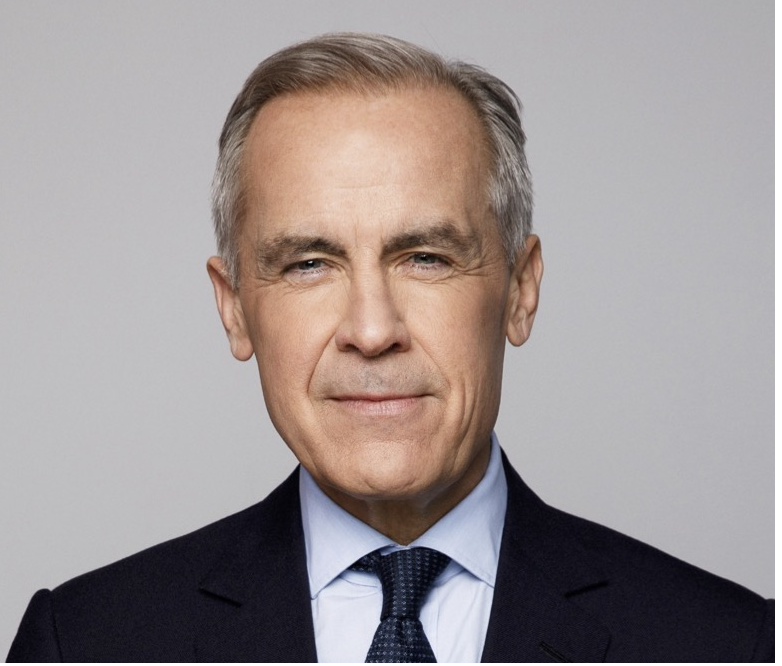
Canadian Prime Minister Mark Carney, www.canada.ca
(Romanian language version linked below)
The speech delivered by Canadian Prime Minister Mark Carney at the World Economic Forum generated strong reverberations—not because it was innovative, but because it said out loud what many already think. The idea that “if you’re not at the table, you’re on the menu” resonated widely precisely because it captures a sense of global anxiety: rules are thinning, and those who do not actively negotiate become objects, not subjects, of international politics.
The reaction was ambivalent. I welcomed the fact that a leader of a middle power had the courage to publicly articulate this unease—an unease I myself had expressed in a recent article published here on Republica. ro. But the sense of relief felt in Davos seems somewhat misplaced, because there is a dangerous gap between rhetoric and action. Recent history shows that it is precisely in this space—between inspiring speeches and contradictory practices—that cynicism takes root and hope dies.
Not competition, but convergence
The fundamental problem of the present moment is often misframed. We are not witnessing a competition of visions among great powers, but rather a convergence of their practices. The United States, China, and Russia—through different forms, but increasingly openly—are using the same tools: force, economic interdependence, sanctions, control of supply chains, critical technologies, infrastructure, and standards as instruments of foreign policy.
This convergence is transforming the international order into a post-universal one: rules do not disappear, but they no longer function as the commonly self-imposed constraints they once were. They become selective, negotiable, and suspendable. In this context, middle powers can no longer comfortably play the role of “guardians of the rules” without high political, economic, and security costs. They are thus caught between the temptation to mimic great powers and the responsibility to preserve what remains of a predictable framework.
Carney’s speech suggested a clear choice in favor of principles and solidarity. The reality of recent actions, however, tells a far more ambiguous story.
Davos vs. Beijing
The Canadian prime minister arrived in Davos after a visit to China, where Canada agreed to export natural resources and agricultural products in exchange for trade facilitation measures—including tariff-free imports of Chinese electric vehicles. Canadian officials declared themselves highly satisfied with the predictability and stability of discussions with their Chinese counterparts. In fact, official visits to Beijing are multiplying this year. South Korea and Ireland have already held bilateral meetings, while Finland, Germany, and the United Kingdom are preparing their own “pilgrimages.” Moreover, the UK has just announced it is ready to authorize the construction of a large Chinese embassy in London, despite concerns about espionage.
None of this is, in itself, surprising. Trade with China is an unavoidable reality. The problem is the lack of collective reflection. Canadian foreign trade policy appears not to consider the impact of these arrangements on other close partners—for example, the European automotive industry, already suffocated by competition in the electric vehicle segment, or Australia, for which access to the Chinese market for critical minerals is essential.
Here lies the rupture. Commitment to a “values bloc” is proclaimed, while each state simultaneously seeks its own individual salvation. Solidarity is demanded, but opportunistic bilateralism is practiced. This dissonance is not an accident; it is an emerging political pattern.
Continuity, not rupture
From this perspective, the Canadian prime minister’s Davos speech does not mark a paradigm shift, but rather the continuation of an old tension: values are affirmed in safe spaces like Davos, while compromises are quietly negotiated in capitals where real stakes are played out. Rhetorical courage is valuable, but it becomes counterproductive if it is not followed by coherent action.
For small and developing countries, this gap can be devastating. They are not only “not at the table,” but they watch as the table itself fragments. When middle powers preach common rules but act unilaterally, they not only erode their own credibility but also amplify pressure on the most vulnerable. These states are forced to accept disadvantageous agreements, sell strategic assets, or tolerate democratic backsliding in the name of stability.
What would a coalition of democratic will actually mean?
If the idea of a coalition of states willing to defend a minimum set of universal principles has any chance of success, it will not succeed on the basis of courageous speeches alone, but through aligned behavior. That would mean middle powers coordinating their trade, industrial, and security policies—even at short-term cost. Sharing risks, not just benefits. Preparing their citizens for real trade-offs, not comforting illusions.
Organized pragmatism—not individual salvation—is the only viable alternative. Not submission, not moralistic fanfare, but coordinated action to diversify supply chains, absorb shocks collectively, adopt common rules for strategic investments, and maintain transparency toward one’s own electorate. In other words, turning fine words into deeds.
Therefore, consistency
Mark Carney’s speech had the merit of telling the truth about the risks of the moment. But truths spoken once, in a prestigious forum, do not change trajectories. In an international order where power is exercised through interdependence and hard bargaining, inconsistency is quickly punished.
If middle powers continue to show courage in Davos and bow in Beijing, they will not only lose their capacity to shape the system—they will actively contribute to its degradation. And for those watching from the sidelines, the message will be clear: rules are optional, solidarity is rhetorical, and the future is negotiated individually.
The true test of leadership is not saying what everyone already thinks, but accepting the cost of acting consistently. Without that, courage remains a stylistic exercise—and hope, a postponed promise.
This article was originally published in Romanian on Republica.ro: Curaj la Davos si cu sapca in mana la Beijing?